Making Banking more affordable for Canadians
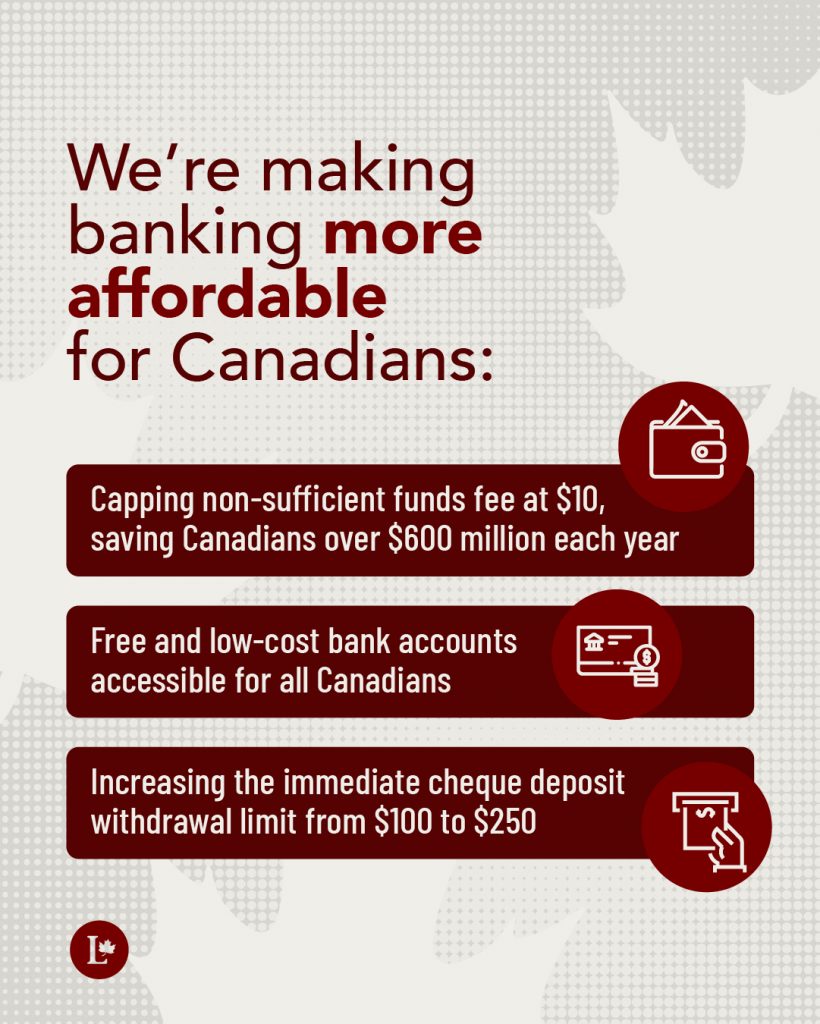
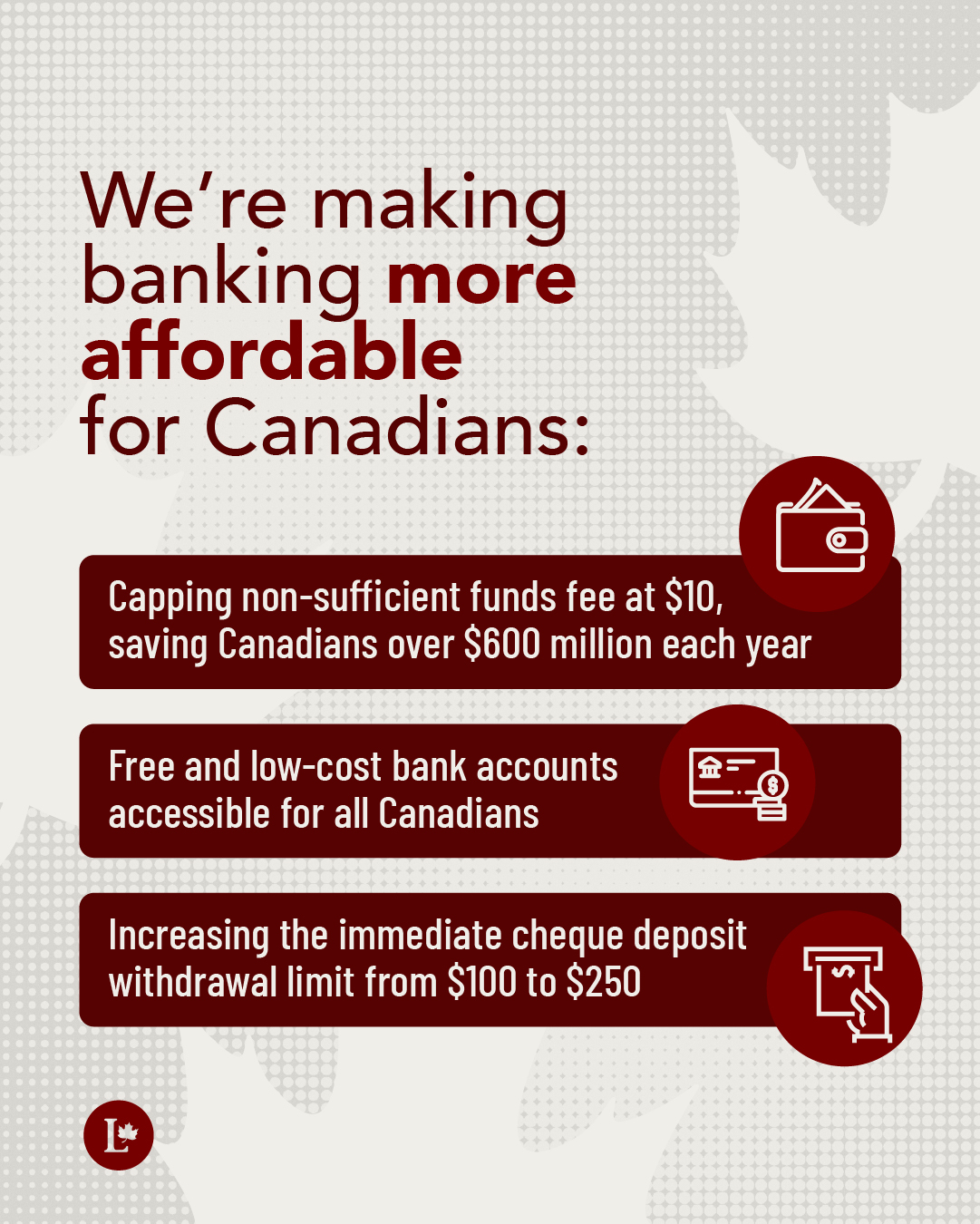
Last week, the Honourable François‑Philippe Champagne, Minister of Finance and National Revenue, announced a major affordability measure that will make banking fairer and more transparent for Canadians. Beginning March 12, 2026, the government’s new $10 cap on non-sufficient funds (NSF) fees, which had previously been as high as $50, will come into effect. With more than one in three Canadians incurring an NSF fee every year, this change directly targets a financial pressure that disproportionately affects people living paycheque to paycheque.
The cap is accompanied by strengthened consumer protections. Under the new rules, Canadians cannot be charged more than one NSF fee within two business days for the same account. Banks will also be prohibited from charging any NSF fee when the overdraft amount is under $10. These common-sense protections ensure that a single missed payment will no longer trigger a cascade of penalty fees and mounting debt.
By reducing NSF charges so significantly, the government estimates Canadians will collectively save over $600 million every year. This is concrete, decisive action that delivers immediate relief to those who need it most.
Minister Champagne also highlighted additional measures recently put in place to lower banking costs. Enhanced low-cost and no-cost bank accounts, now available at 14 federally regulated financial institutions, offer more transactions at no more than $4 per month, with $0 accounts for youth, students, low-income seniors, and Registered Disability Savings Plan beneficiaries. At the same time, modernized cheque-hold rules introduced through Bill C-15 will allow Canadians to access up to $250 of deposited funds immediately.
Together, these first steps reaffirm our government’s commitment to making everyday banking more affordable, transparent, and fair while continuing to build solutions that improve the financial well-being of all Canadians.